Hawker centres on the UNESCO list, a Michelin-starred bowl of minced pork noodles, crab worth the mess and a breakfast most visitors sleep through — what we actually send guests to eat here, with a map link for every one of them.
Published: 29 August 2026 · 5 min read
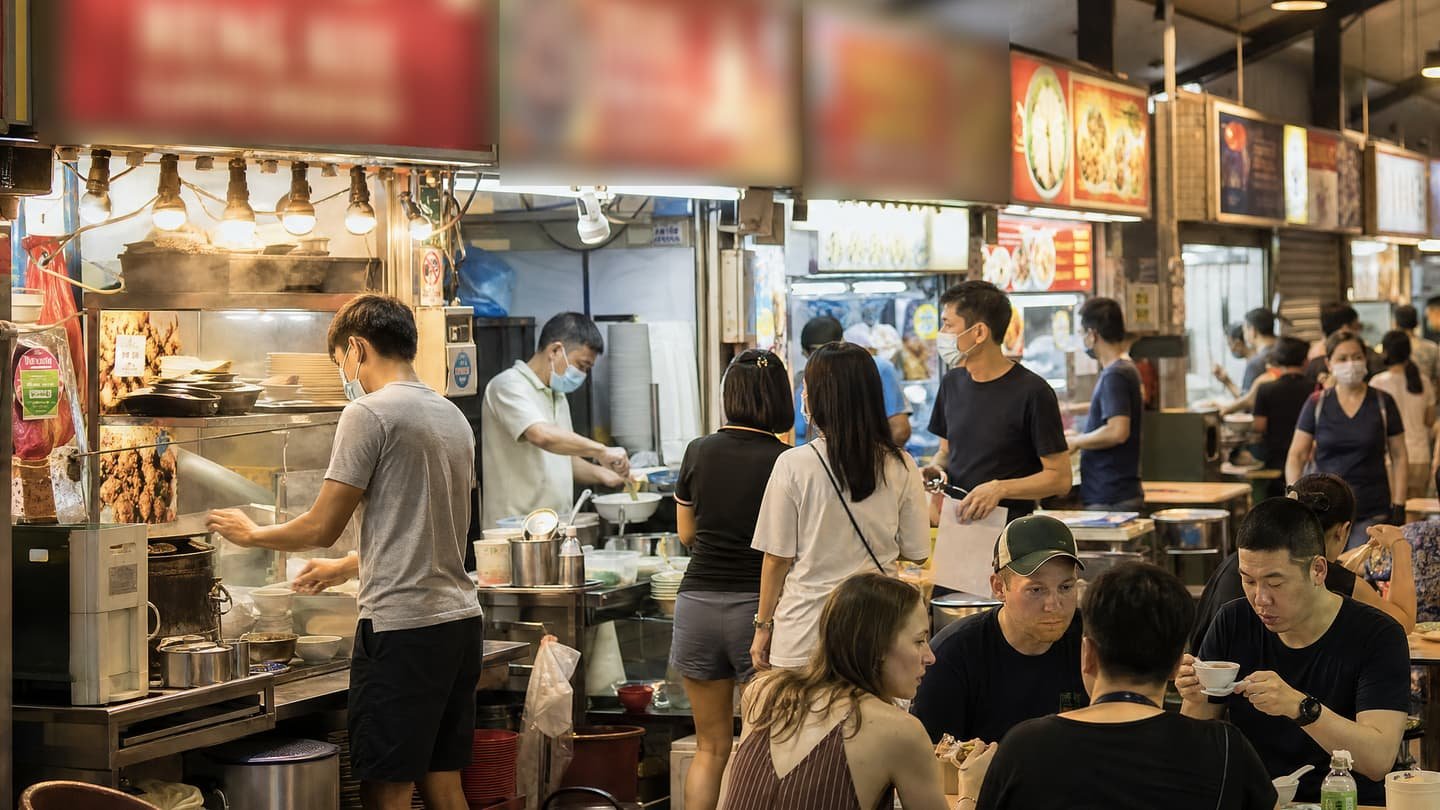
Hawker centres are where the country actually eats
Singapore's hawker culture sits on UNESCO's list of intangible cultural heritage, and the phrase that listing uses — community dining rooms — is the most accurate description of these places anyone has written. A hawker centre is not a food court and it is not a street-food market. It is where a banker, a taxi driver and a family of four eat the same plate at neighbouring tables, every day, and it is the first thing we take a guest to see. If it is your first one, our guide to eating at hawker centres covers how the ordering and the seating work before you are standing in it.
Maxwell Food Centre, on the edge of Chinatown, is the one we use most. Roughly eight in the morning until ten at night, most dishes between S$3 and S$8, and one stall in particular to look for: Tian Tian Hainanese Chicken Rice, a Michelin Bib Gourmand with plates from around S$5. Go early or go late — the middle of the lunch hour is the only genuinely difficult time of day.
The instinct most first-time visitors have is to treat one hawker centre as one meal. Resist it. The way to eat here is a plate at a time from several stalls, shared across the table, with the drinks bought from the stall that sells nothing else — and to stop while you still want more, because you are going to want to do this again at the next centre.
The stall that put Michelin in a hawker centre
Hawker Chan earned the line that food writers still repeat: the first street-food stall anywhere in the world to be awarded a Michelin star, for soy sauce chicken. What made that news was the address rather than the plate — the guide had walked into a hawker centre — and it is a useful introduction to how this city ranks a kitchen.
Hill Street Tai Hwa Pork Noodle holds a star of its own, for bak chor mee — minced pork noodles with vinegar, chilli and crisp pork lard, assembled to order, one bowl at a time. It is the single dish we most often hear guests still talking about on the drive back to the hotel.
A star inside a hawker centre is not a novelty here, it is how the guide reads in this city. A visitor who spends every evening in a dining room with a tasting menu will eat very well in Singapore and still miss the thing Singapore is actually famous for.
Chilli crab is worth the mess it makes
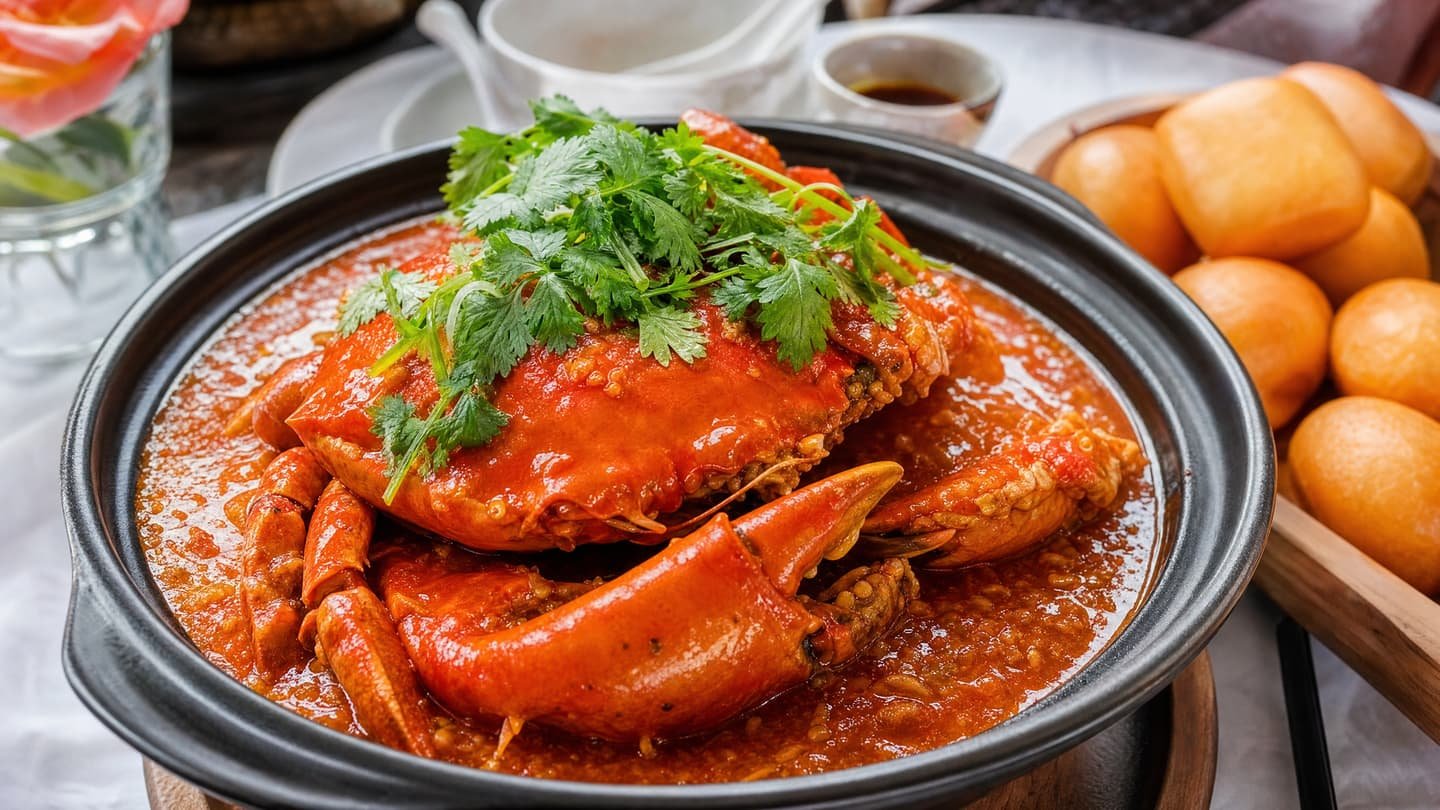
Chilli crab is the national dish by acclamation: a whole crab in a thick, sweet-hot tomato and chilli gravy, eaten with your hands and not apologised for. JUMBO Seafood is where we send most first-timers — the version there is balanced rather than fierce, and the ION Orchard outlet is the convenient one to aim for if you are staying in the city.
If heat is the point rather than the risk, Long Beach Seafood takes the same dish further. Either way, order the fried mantou: small golden buns, crisp outside and soft in, that exist for one purpose, which is mopping the bowl. Ordering crab without them is a mistake we watch guests make exactly once.
Book it. Crab is not a walk-in dish on a Friday evening, the good tables go first, and JUMBO's own site is the place to start. Wear something you do not mind splashing, take the bib when it is offered, and give the meal two hours rather than one — this is not a course, it is the evening.
Chilli crab, and the fried mantou buns that exist to mop the bowl.
Satay under the towers, once the road closes
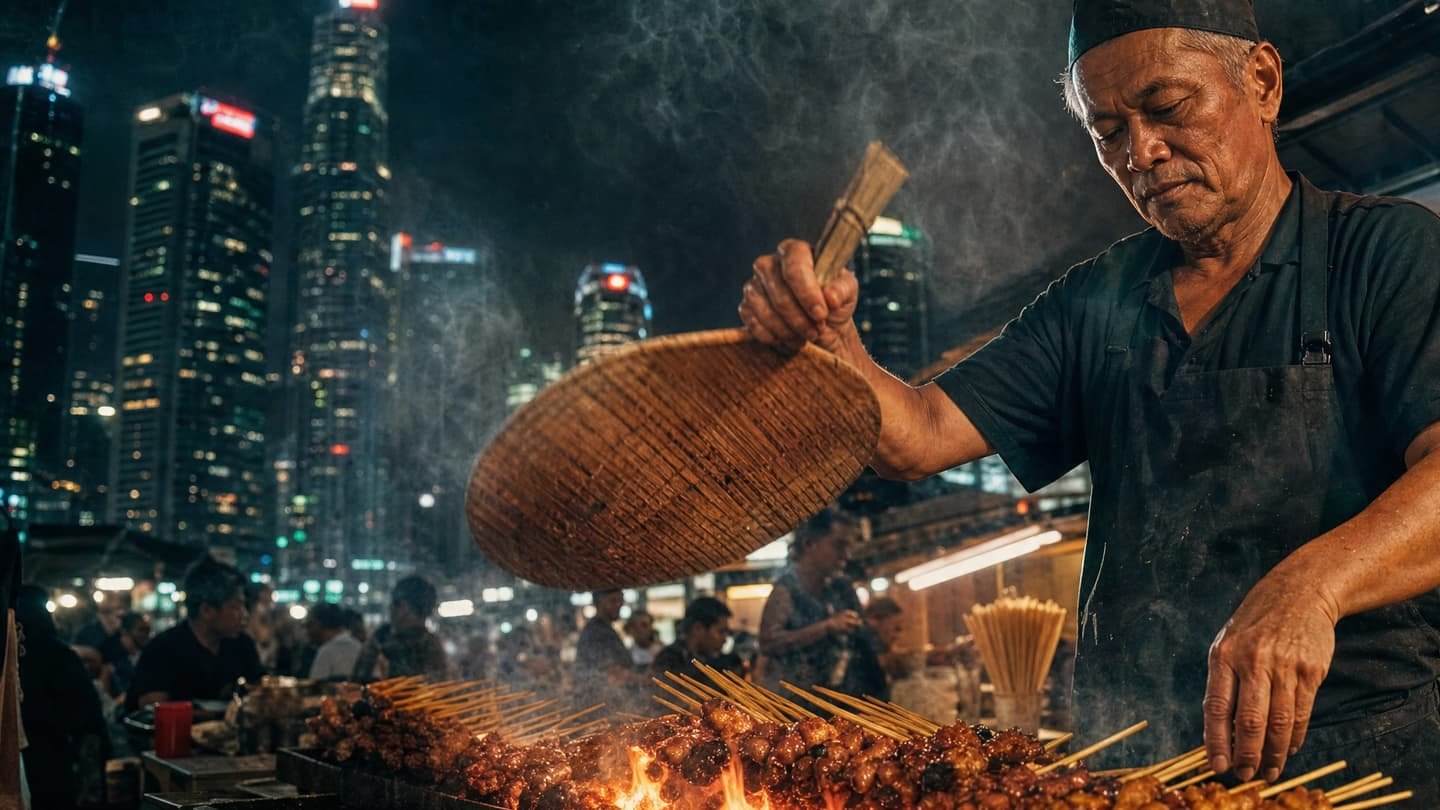
Lau Pa Sat is a Victorian cast-iron market hall standing in the middle of the financial district, open around the clock, and in the evening it does something none of the others do: the street beside it closes, the grills come out onto the tarmac, and it becomes a satay street under the office towers.
Satay is skewered meat over charcoal with a peanut sauce, ordered by the ten and best eaten within a few feet of the smoke. It is the easiest evening in this whole post to arrange and one of the best: no reservation, no dress code, and a skyline directly overhead that most visitors have only ever seen from a boat.
Newton Food Centre is the other open-air choice, and the one some guests recognise before they arrive — it is the hawker centre from Crazy Rich Asians. It is livelier, more tourist-facing and a little pricier than Maxwell, and it earns the trip anyway: Alliance Seafood is the stall to know there, for barbecued stingray and a chilli crab at hawker prices.
The satay street beside Lau Pa Sat sets up once the road closes for the evening.
Breakfast is the meal visitors skip and locals never do
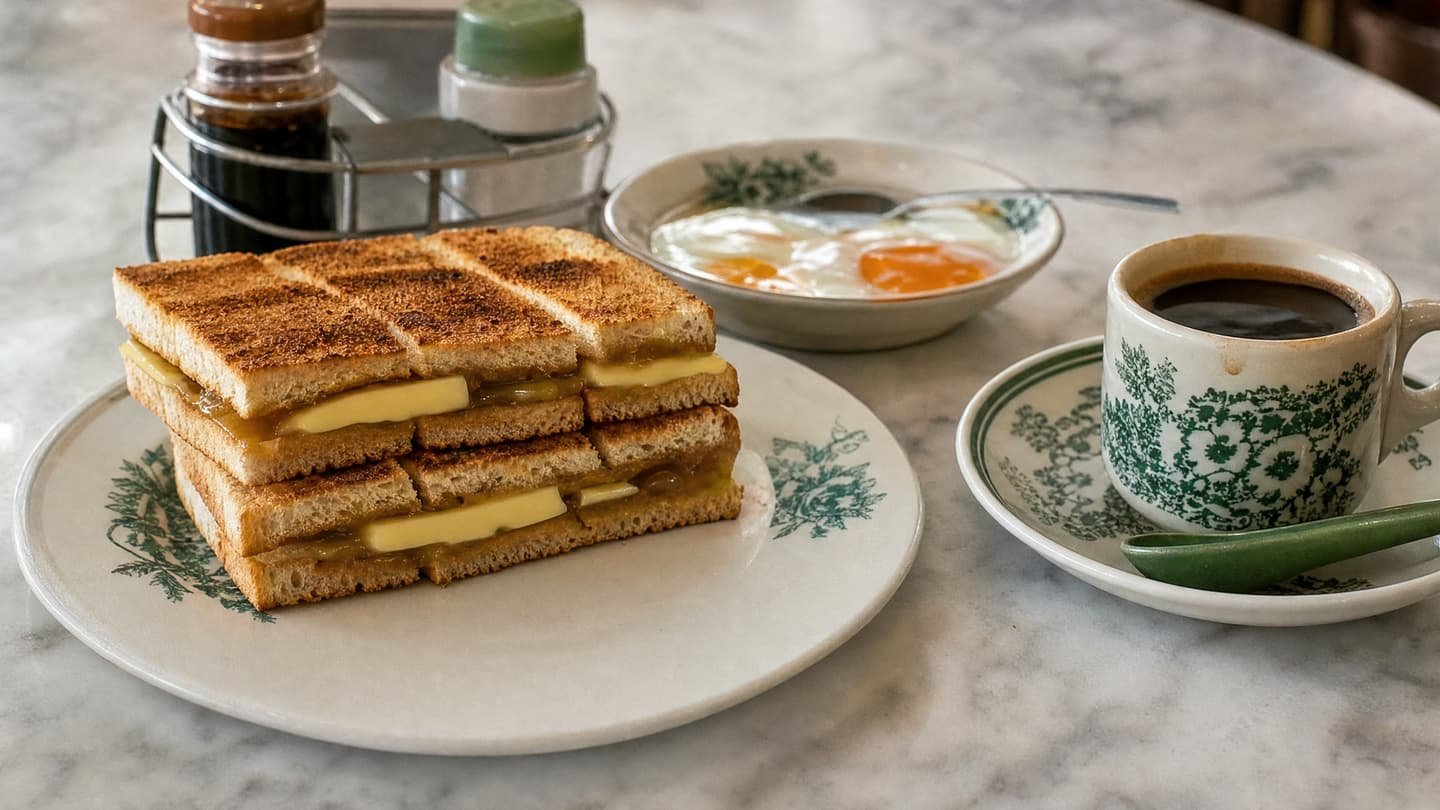
The Singaporean breakfast is three things on one small table: kaya toast, a cup of kopi, and two soft-boiled eggs. Kaya is a coconut and egg jam, spread thin under a cold slab of butter; the eggs arrive barely set, to be cracked into a saucer with dark soy and white pepper and drunk rather than eaten. It is the most local half-hour a visitor can buy in this city.
Ya Kun Kaya Toast is the one you will keep walking past, because it is everywhere, and the set is the same wherever you take it. That consistency is exactly what you want on a first morning, before you know what you like — Ya Kun's own site if you would rather look it up before you go.
For the older version of the same breakfast, Tong Ah Eating House on Keong Saik Road makes its own kaya and serves it in a room that has not been redesigned for anybody. Order at the counter, take a table, and do not be in a hurry about any of it — the unhurriedness is the ritual, not a delay in it.
Kaya toast, soft-boiled eggs and kopi — the most local half-hour of the trip.
How to fit all of this into a few days
There is more than a week of eating here and most visitors have four days. If you add only one more dish, make it Katong laksa: rice noodles in a rich, deeply savoury coconut broth, famously eaten with a spoon and nothing else. It belongs to its own stretch of the east of the island, which our neighbourhood guide sets out alongside the rest of the city.
The format that has worked best for visitors this year is a small guided run of seven to nine tastings across a couple of centres and a Michelin stall or two — enough to try things you would never have ordered, without queueing twice for the same plate. Having someone order for you is worth more than it sounds here: the best stalls are rarely the ones with the photographs above the counter.
That is the kind of day we build. Our published tour packages include evenings shaped around exactly this, and if you would rather have the whole trip drawn around your own appetite and your own pace, our private tours start from your dates and come back to you in writing. Tell us what you want to eat and we will tell you when to be hungry.
Send us your dates and your party size. You get a written reply within 24 hours, in your language: an outline of the days and what shapes the cost. No obligation.