The advice that helps most on a first trip here is never a list of ten sights. It is which card to tap, how much cash to carry and where to break the note, which queue to join, and which entirely ordinary parts of the island are worth an afternoon — the things we say in the car on the first morning.
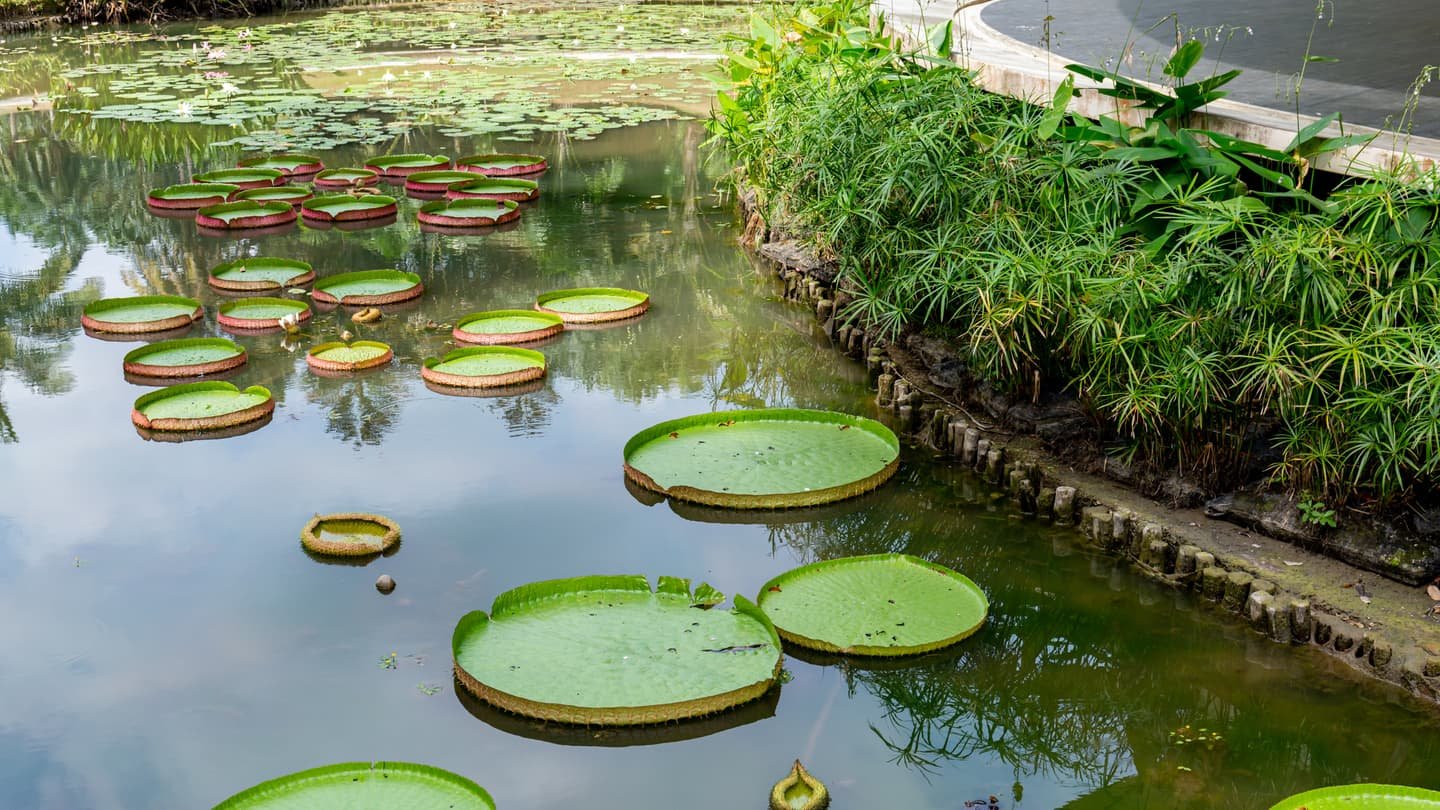
Giant lily pads in the Botanic Gardens, which opens at five in the morning.
Published: 10 September 2026 · 7 min read
The card already in your wallet is your travel pass
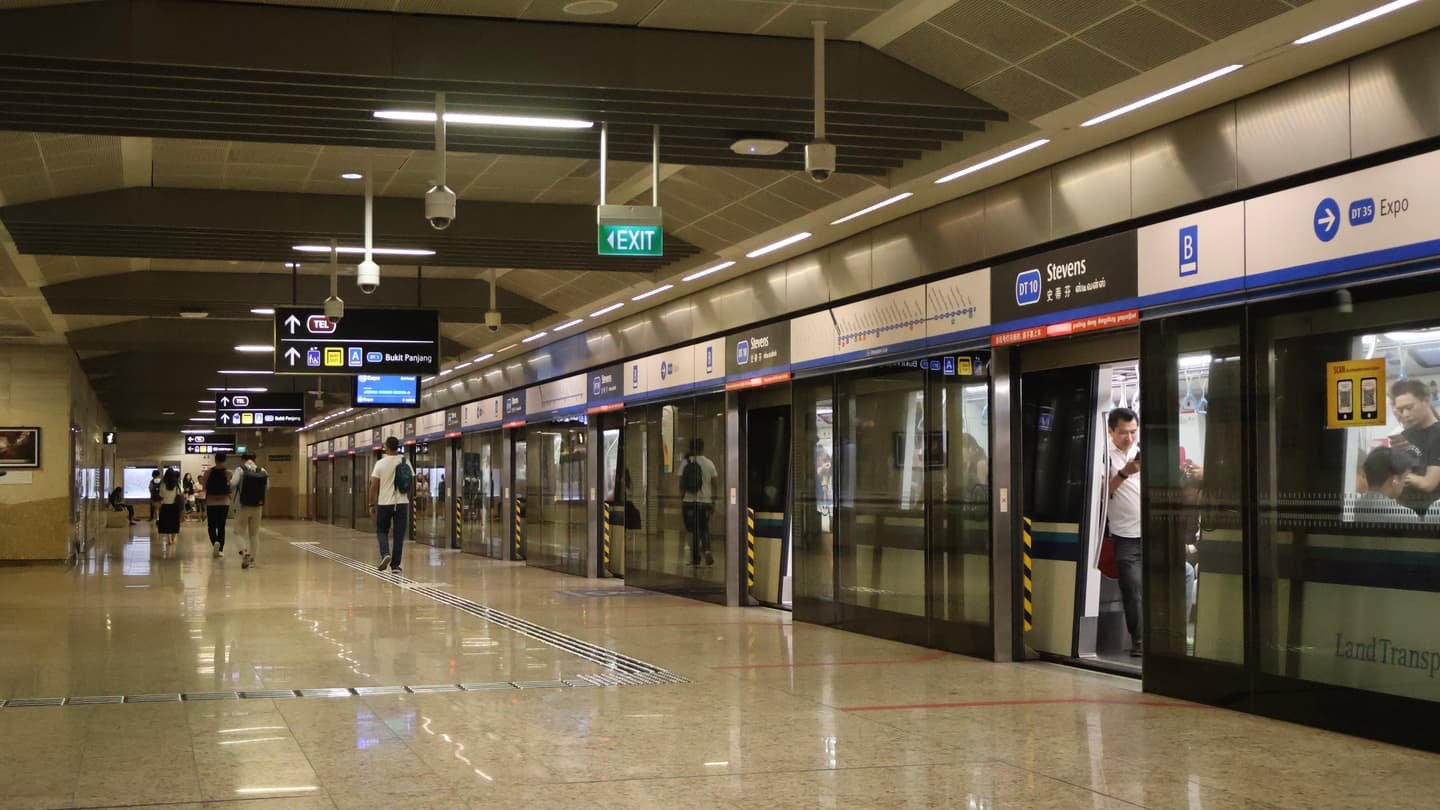
Nearly every first-time visitor arrives expecting to buy a ticket, and nearly none of them needs to. A contactless Visa or Mastercard — the physical card, or the same card in the phone you are already holding — taps straight onto the gate of any MRT station and onto any public bus, and the fare comes off the card afterwards. There is no prepaid pass to buy, no machine to queue at on arrival, and no card to hand back at the end of the trip. SimplyGo is the system doing it, and the whole of a visitor's interaction with it is holding a card against a reader.
Two habits are worth forming on the first ride. Tap out as well as in, on the bus as much as on the train, because the fare is calculated from the pair and a missed tap out is charged as though you rode to the end of the line. And give each traveller their own card: one card is one person here, so a couple tapping the same card through a gate will get the second person stopped at it. Everything else about the network is unremarkable in the best sense — clean, air-conditioned, signed in English, and cheap enough that the sums are not worth doing.
Trains run from around half past five in the morning until about midnight, which covers every hour a visitor is likely to want except the one after a late dinner, and that is what taxis and ride-hailing are for. The exceptions to all of this are the days with luggage on them: the train is a poor choice on arrival and departure mornings, whatever the map says. Our guide to getting around Singapore sets out the rest — lines, fares, when a car is genuinely the better answer.
No pass, no ticket machine: a contactless bank card opens the gate. Resized from a photograph by S5A-0043, CC BY 4.0.
Carry cash, and never the hundred-dollar note
Singapore is card-friendly almost everywhere a visitor spends significant money, and stubbornly cash-only exactly where the best of it is cheap. Hawker stalls, older coffee shops, wet markets and a few taxis still take cash or a local QR code and nothing else. The number we give guests is fifty to a hundred Singapore dollars in cash per person per outing, which is far more than a day of hawker meals costs and exactly enough that nobody has to leave a queue.
The QR codes on the counters are the local default rather than a tourist option: they are drawn on a Singapore bank account, so for most visitors the practical answer is simply notes. Small ones. A stall that turns over three-dollar plates all lunchtime keeps a float to match, and the hundred-dollar note — which is what the cash machine at the airport will cheerfully hand you — is the one note it can least easily change.
So break it before you need it. A supermarket, a pharmacy or your own hotel will take a hundred without blinking, and then the rest of the week runs on tens and fives. If you are still deciding whether to change money at all, our guide to arriving in Singapore covers what to do in the first hour on the ground, in the order it actually matters.
Eat where the queue is local, not where the menu is in English
A hawker centre is not a food court and it is not a street-food market. It is a covered hall of individually run stalls where an entire neighbourhood eats every day, and the practice is on UNESCO's list of intangible cultural heritage under a phrase worth borrowing: community dining rooms. The stalls are numbered rather than branded, the tables are shared, and nobody will mind you sitting down at one with three strangers already at it.
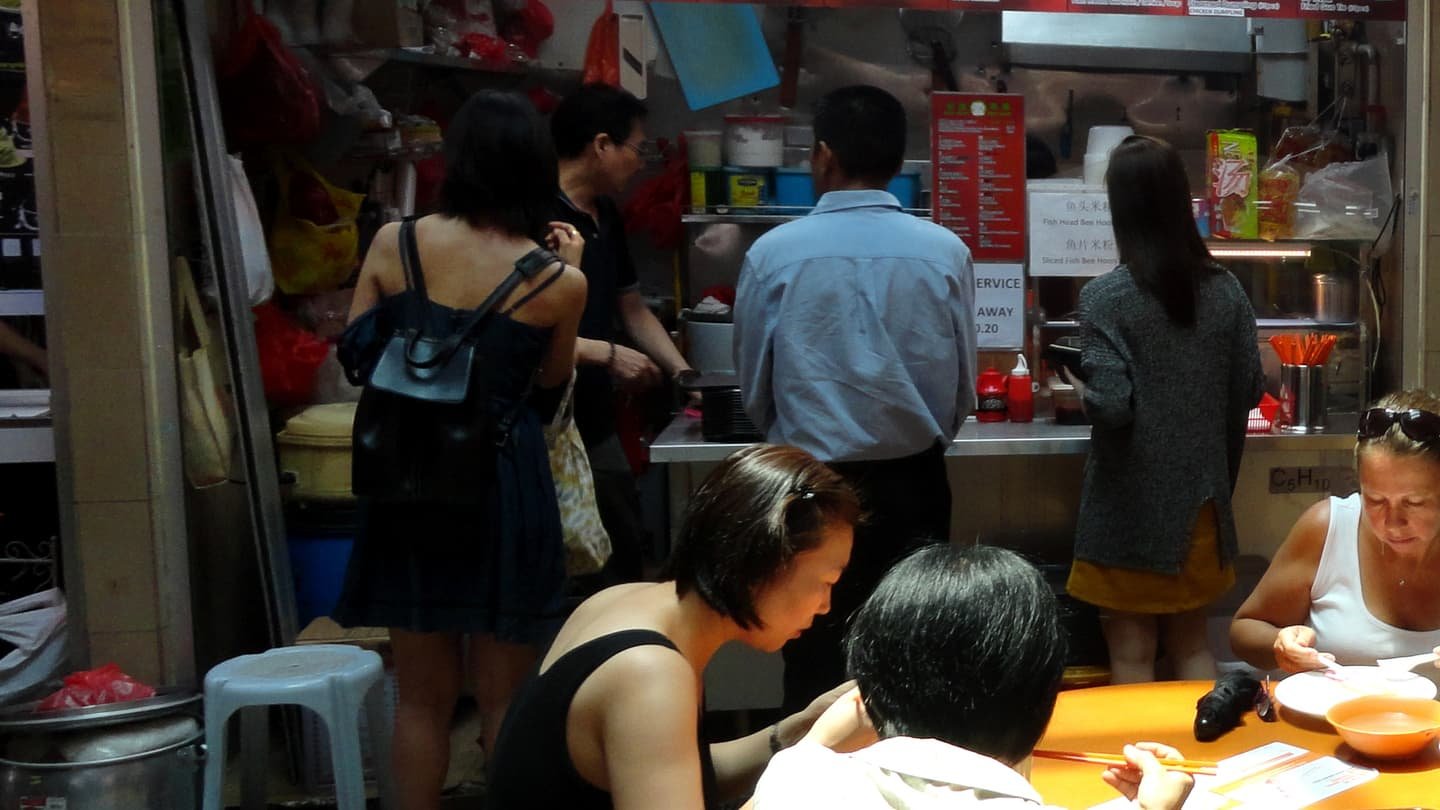
The signal to read is the queue, and specifically who is standing in it. A line of office workers at half past twelve is the recommendation; an empty counter beside a busy one, at the same hour, is the answer to a different question. Go at eleven or after half past one and you will wait for nothing at all, which on a first day matters more than the extra ten minutes of authenticity you would have bought at the peak.
The mechanics — how to order, how the tables work, how to hold one while you queue — are in our guide to eating at hawker centres, and the stalls and dishes we actually send guests to are in our post on what to eat here. What no guide can supply is the willingness to order something you cannot identify from a photograph, which is where a first-timer's best meal usually comes from.
At Maxwell Food Centre: the queue is the recommendation. Cropped from a photograph by Fabio Achilli, CC BY 2.0.
The green half of the island is the half people remember
The Singapore Botanic Gardens is a UNESCO World Heritage Site, it is free apart from the National Orchid Garden inside it, and it opens at five in the morning and closes at midnight. Those three facts together make it the single most useful thing in this post: there is nothing to book, no ticket to plan around unless you want the orchids, and the hour after it opens is the coolest and quietest the island gets. Guests who take that hour on their first morning also solve their jet lag with it, which is not a coincidence.
Gardens by the Bay is the one everybody has already seen a photograph of, and the part most people photograph — the outdoor gardens and the Supertrees — costs nothing to walk through. The two glasshouses are ticketed and worth it on a hot afternoon, but the decision is smaller than the internet makes it look: you can spend an evening there having bought nothing.
Beyond those two the island is stitched together with park connectors, reservoir paths and patches of secondary rainforest that most itineraries never mention. None of it is a landmark and all of it is why people describe this place as green afterwards. The heat is the only real constraint, and the answer to the heat is always the same one: go early.
Nobody's attraction: the Singapore people actually live in
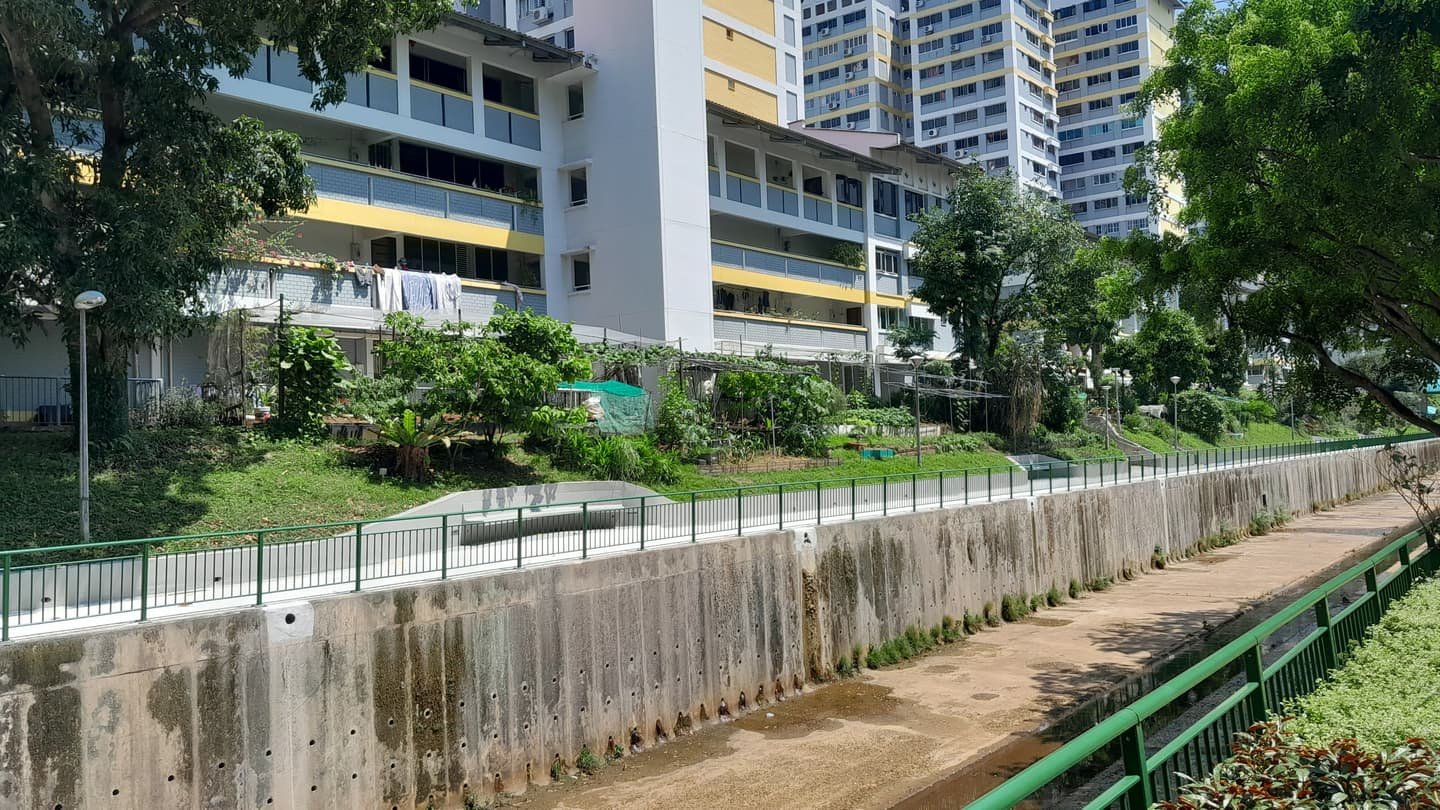
Around four in five people here live in public housing, in towns built around an MRT station with a hawker centre, a wet market and a row of shops at the foot of the blocks. Visitors almost never see one, and the ones who do tend to say afterwards that it was the part of the trip that told them the most. There is nothing to buy a ticket for. You get off the train somewhere ordinary, walk under the blocks, and see how the city works when it is not performing.
The other half of that is the shophouse streets — Joo Chiat and Katong out east, Tiong Bahru, Blair Road, the lanes off Neil Road — where the terraces are conservation properties people live in rather than a preserved quarter. Koon Seng Road is a residential street that happens to be one of the most photographed hundred metres in Singapore. Roots, the national heritage portal, is where to read what you are looking at, and our neighbourhood guide sets the districts out in the order they make sense to visit.
We keep noticing the same thing when guests send photographs back to us afterwards. Very few of them are of the skyline. They are of a corridor of laundry poles, a lane of painted shutters, a table of strangers at lunch — the ordinary city, which is available to anybody who thinks to go and look at it.
A public-housing town of the kind four in five residents live in, allotments and canal included.
What a guide adds that a list of ten things cannot
Everything above is written down because it stays true. What does not stay true is the part that decides whether a day is good: whether this queue is worth it at this hour, which of two hawker centres is quiet today, what the rain at four o'clock means for the plan, which stall the family behind the counter is proud of. That is not information a list can hold, because it changes weekly and nobody publishes it.
It is also the honest reason to have somebody with you rather than only a map. Elite Experiences Pte Ltd holds Travel Agent Licence No. TA04089, and every guide on our roster is individually STB-licensed — which is a floor rather than a promise. The promise is that whoever meets you has eaten at the stall they are walking you to.
If you would rather start from something already drawn, our published tour packages are built around days of this shape, with the prices stated. If you would rather the days were drawn around you — your dates, your appetite, your pace — that is what our private tours are for. Tell us when you land through the enquiry form and we will come back to you in writing.
Shall we draw your first days in Singapore around this?
Send us your dates and your party size. You get a written reply within 24 hours, in your language: an outline of the days and what shapes the cost. No obligation.