The best things to do in Singapore in 2026, from people who live here.
Gardens that light up for free at a quarter to eight, a new wildlife park, ninety-seven Bib Gourmand selections, three heritage quarters you can cross on foot and a rainforest canopy walk within the city limits — the things we actually put in front of guests this year, what each one asks of your time, and a source for every fact in it.
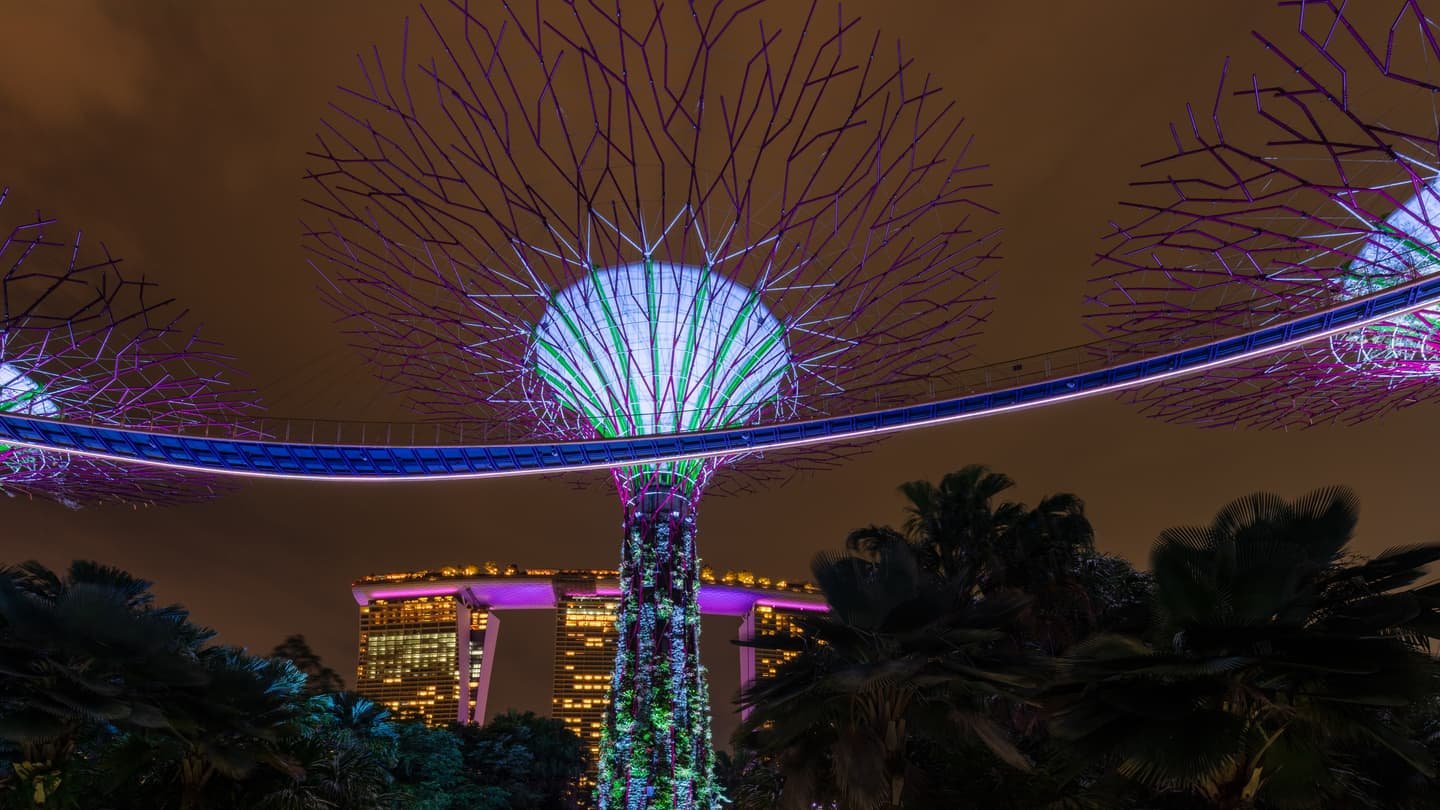
The Supertree Grove after dark, where the light show costs nothing. Cropped and resized from a photograph by Diego Delso, CC BY-SA 4.0; this version is shared under the same licence.
Published: 23 September 2026 · 13 min read
If you only have four days: the short list
Most lists of things to do in Singapore run to thirty or forty entries, and most visitors have four days. So before the long version, here is the one we give guests who ask for it on the drive in from the airport. One evening at Gardens by the Bay for the free light show. One morning in the Botanic Gardens before the heat. One lunch at a hawker centre, ordered a plate at a time from several stalls. One walking afternoon across Chinatown, Little India and Kampong Gelam. And one day that belongs to whoever is travelling with you — Mandai for the animals, Sentosa for the children, or the TreeTop Walk for the people who would rather be in a forest.
That is five things, and it is enough. The most useful advice in a busy thread on Reddit's r/solotravel this month was not a sight at all: its most upvoted reply said some people can see everything in one or two days, but the writer needed four or five, because they like to wander and sit in cafés. Another reply put the heat plainly — walking the whole central area in a few hours in the heat is physically possible, and not enjoyable for most people. Build in the slack, and every item below gets better.
Everything that follows is grouped the way a trip is actually planned: the landmarks, what is new this year, the food, the old quarters and museums, the Botanic Gardens and the rainforest, Sentosa, the local favourites, and what is on between now and November. Every fact that came from a source links to it, and the sources are listed together at the end. If this is your first visit, our note on what a local tells first-time visitors covers the card, the cash and the queues first.
Marina Bay and the landmarks you came to see
Gardens by the Bay is the landmark worth arriving early for and staying late at. The outdoor gardens and the Supertree Grove cost nothing to walk through, and the Garden Rhapsody light-and-music show among the Supertrees is free too, listed nightly at 7.45pm and 8.45pm. The two glasshouses — the Flower Dome and the Cloud Forest with its indoor waterfall — are ticketed, and they are the best place on the island to spend the hottest two hours of an afternoon.
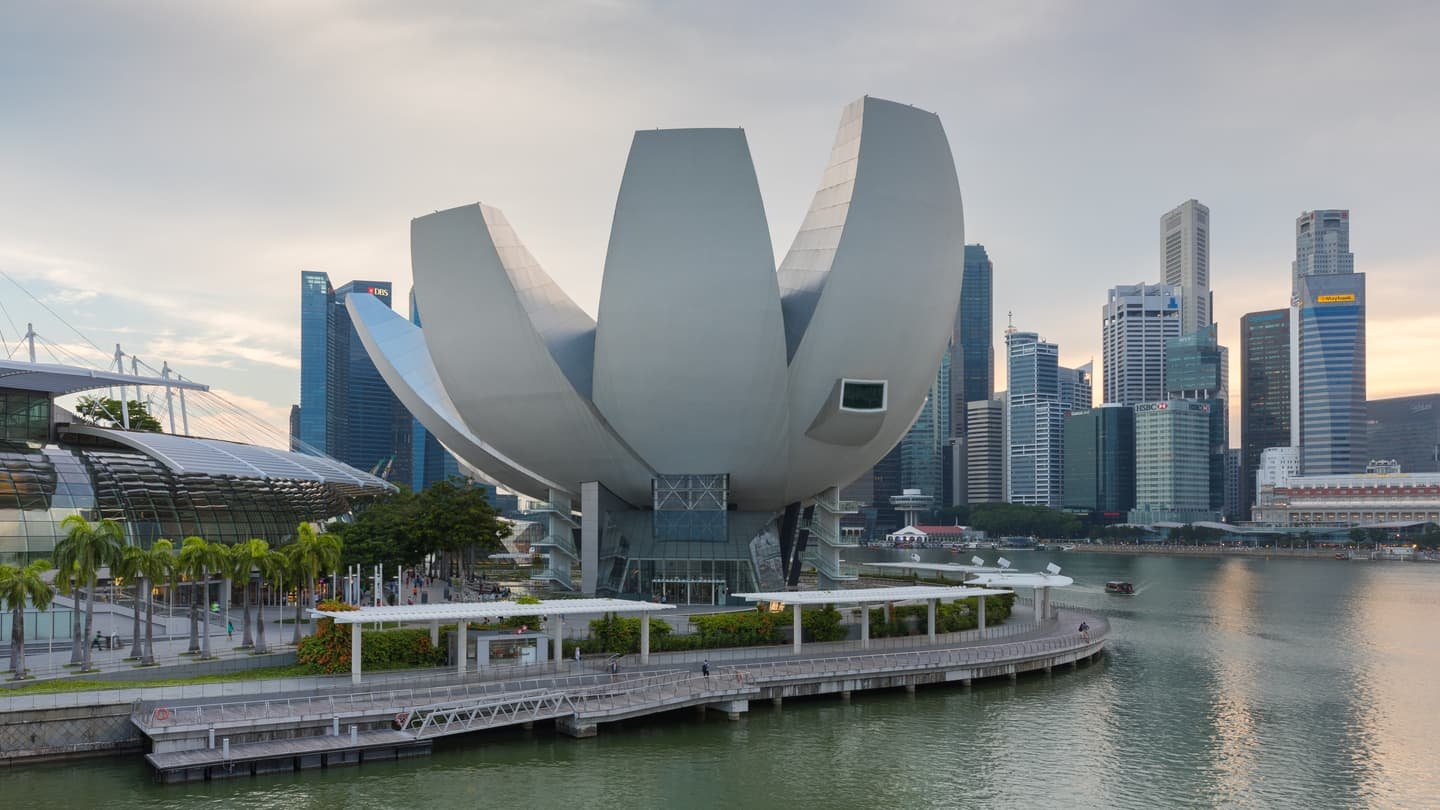
Across the water, the lotus-shaped ArtScience Museum has reopened teamLab's Future World with new artworks this season, which makes it the easiest indoor hour in the bay for families. Walk the promenade from there past the Merlion to the Fullerton and the civic district, and you have seen the postcard in about forty minutes on foot, in the one order that keeps the skyline in front of you.
Two more landmarks are easier to fit in than people expect. The Rain Vortex at Jewel Changi Airport sits before security, so it belongs to your departure day rather than a day of its own — leave three hours for the airport instead of two and see it with your bags already checked. And the National Gallery Singapore, in the former Supreme Court and City Hall, is the one museum in the civic district we would put ahead of the skyline on a rainy day.
The ArtScience Museum, where teamLab's Future World has reopened with new work. Cropped and resized from a photograph by Basile Morin, CC BY-SA 4.0; this version is shared under the same licence.
New in 2026: the openings worth rearranging a day for
The biggest change is at Mandai, in the north of the island. Its newest park, Rainforest Wild Adventure, is built around an elevated walkway through the canopy, with East and West zones, fifty-eight species, and two animals shown in Singapore for the first time: the okapi and the Diana monkey. For the braver, the Canopy Glider and the Ravine Swing run through the same trees. Next door, Exploria — described by Time Out as five indoor worlds, from icy plains to dinosaurs that move — is the answer to a wet Mandai afternoon.
On Sentosa, the Singapore Oceanarium at Resorts World Sentosa opened in July 2025 and replaced the old aquarium with one about three times its size: twenty-two zones, more than a hundred thousand marine animals, and a thirty-six-metre viewing panel in its Open Ocean zone. Back at Gardens by the Bay, IMBA Theatre is billed as the city's first attraction given over entirely to immersive art, with projection walls twelve and a half metres high.
Three smaller openings, all on Time Out's list, suit particular people. The Malay Heritage Centre in Kampong Gelam has reopened after a three-year revamp with six themed galleries and more than 270 artefacts — the best single hour of context for the neighbourhood around it. Filmhouse, from the team behind The Projector, screens arthouse, documentary and classic films at Golden Mile Tower on Beach Road. And Dorifto!, a drift-karting track on a car-park level in Novena modelled on the Tokyo streets of Initial D, needs no driving licence at all, which makes it the teenager's pick of the year.
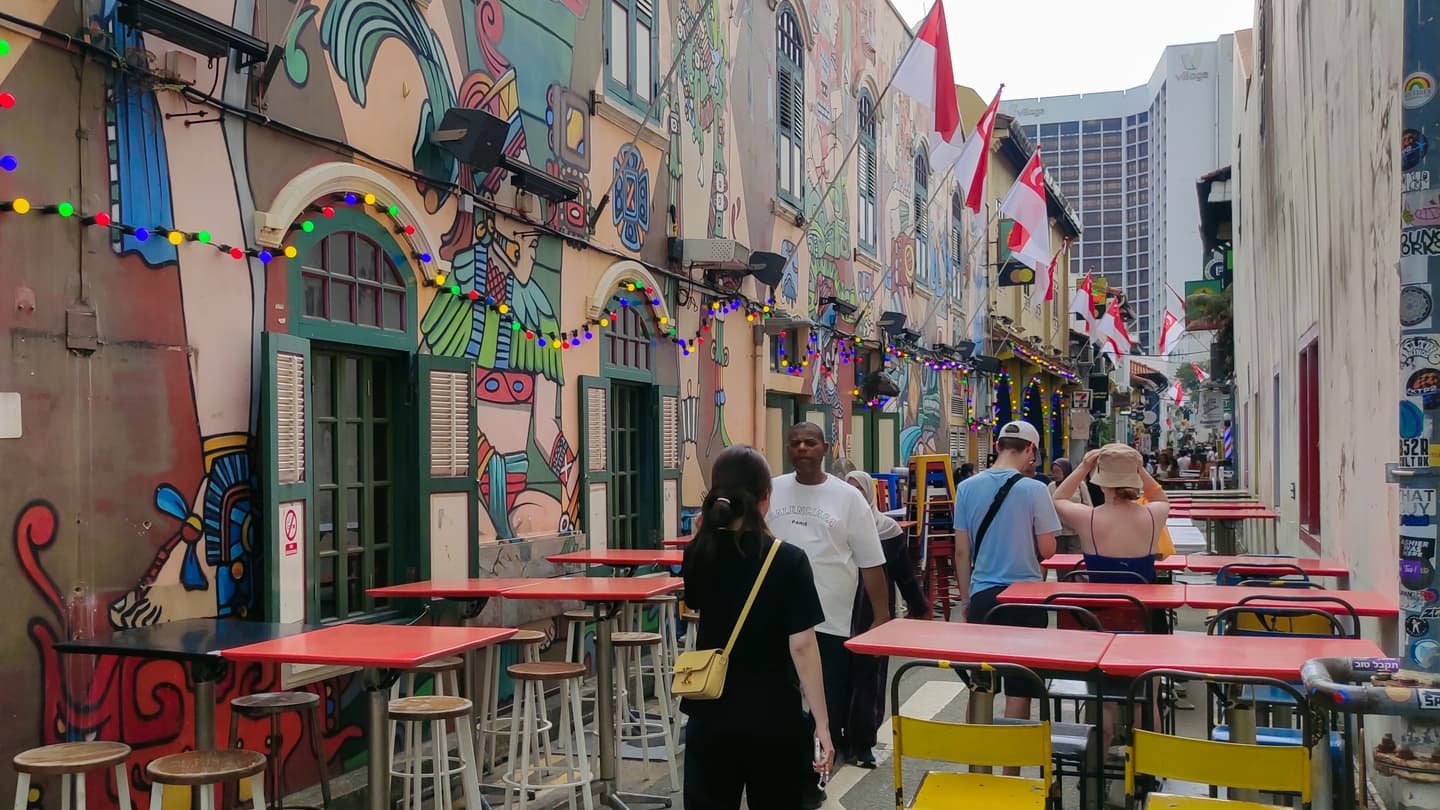
Haji Lane in Kampong Gelam, a few minutes' walk from the reopened Malay Heritage Centre. Cropped and resized from a photograph by Moheen Reeyad, CC BY-SA 4.0; this version is shared under the same licence.
Eat at a hawker centre, then eat at another one
Singapore's hawker culture is on UNESCO's list of intangible cultural heritage, and it is the one thing here best done more than once. The 2026 MICHELIN Guide Singapore, its tenth edition, names 97 Bib Gourmand selections for good food at a moderate price, and around seventy of them are hawker, market or coffeeshop stalls — which tells you where the city's best value is.
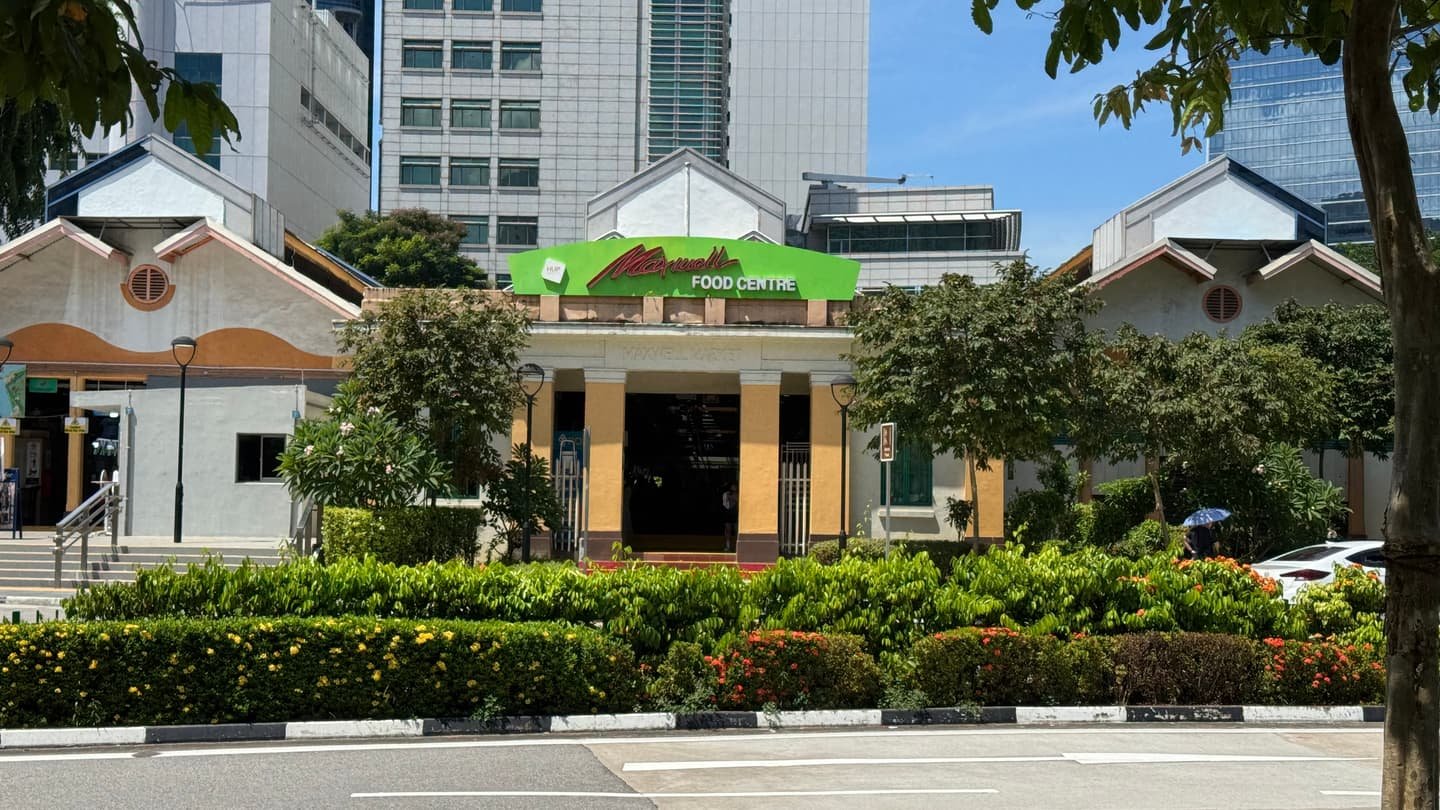
The new entrants this year, as Time Out lists them, include King of Laksa, Hup Kee Fried Oyster Omelette, Rajarani Thosai and Tian Nan Xing Minced Pork Noodle. Seventeen places have held a Bib Gourmand in all ten editions, among them Tian Tian Hainanese Chicken Rice at Maxwell Food Centre, Song Fa Bak Kut Teh and Hoo Kee Bak Chang. On a first visit, start with the long-runners; they have earned the consistency.
Two tips from Singaporeans themselves this month. On r/SingaporeEats, a much-upvoted post praised Annalakshmi, the volunteer-run vegetarian buffet on Shenton Way where you pay what you feel the meal was worth — the poster paid about seven to ten dollars. Another celebrated a plate of chicken rice for S$1.90 at Nguan88 in Ang Mo Kio. Neither is a landmark; both are the city eating as it always has. Our hawker centre guide covers how ordering and seating work, and our must-try food post names the dishes.
Maxwell Food Centre, home of a chicken rice stall that has held a Bib Gourmand in all ten editions. Photograph by Actuall7, dedicated to the public domain under CC0 1.0; cropped and resized.
Chinatown, Little India and Kampong Gelam, on foot
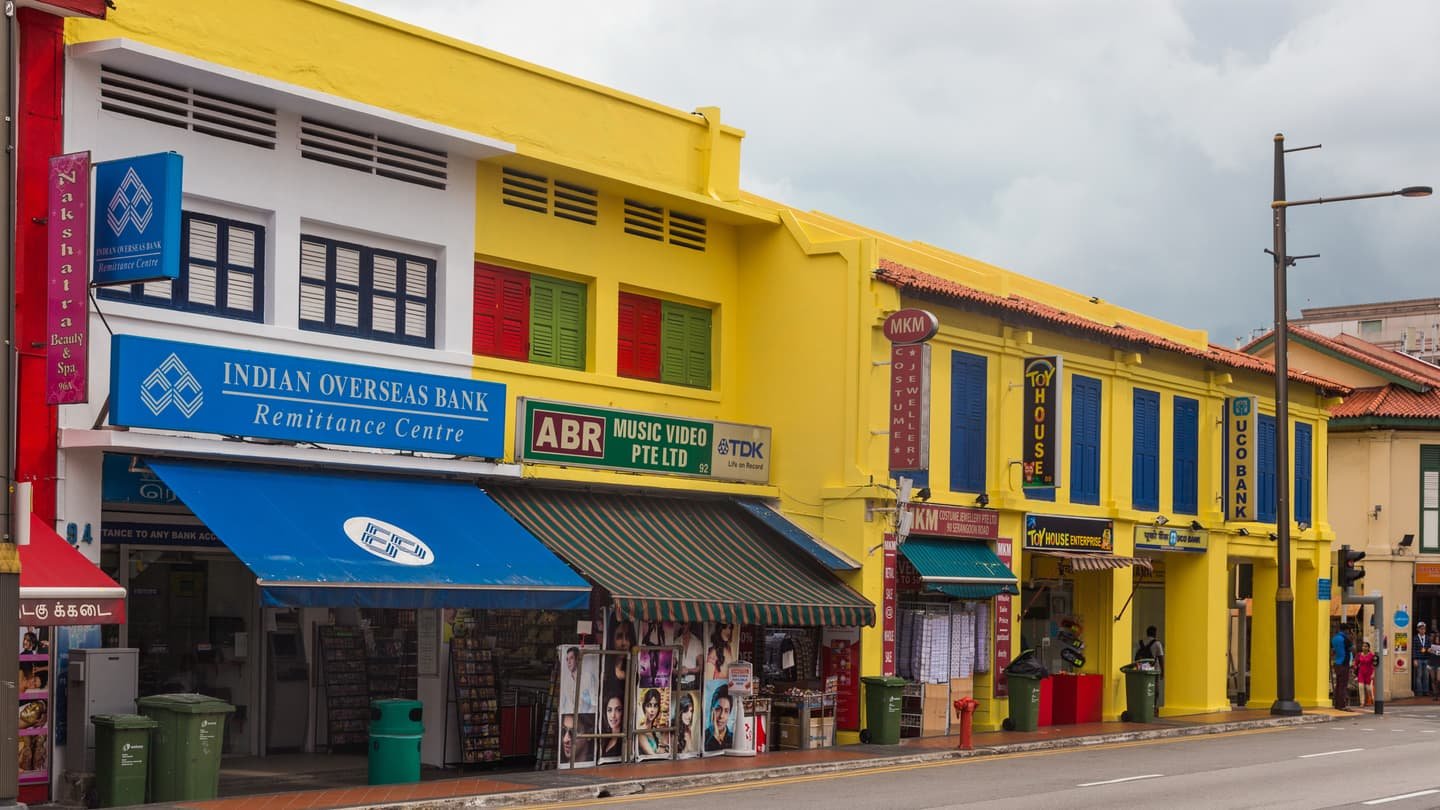
The three historic quarters sit close enough to walk between in an afternoon, and walking is how they make sense. In Chinatown, the Buddha Tooth Relic Temple and the Sri Mariamman Temple — Singapore's oldest Hindu temple — stand a few minutes apart on the same grid of shophouse streets. Little India is Serangoon Road and the lanes off it: Tekka Centre for lunch, garland stalls, gold shops and the Sri Veeramakaliamman Temple. Kampong Gelam is the Sultan Mosque, the textile shops of Arab Street and the murals of Haji Lane.
Go in the late afternoon rather than at midday, and in that order if you would like the evening to end over dinner in Kampong Gelam. Roots, the national heritage portal, is where to read about what you are looking at before you go, and our neighbourhood guide sets the districts out one by one, with the quieter streets locals prefer.
For a museum afternoon, the Asian Civilisations Museum opens Sacred Caves: Dunhuang, Buddhism, and the Silk Road on 25 September, running until 7 March 2027 — the story of the Mogao Caves at the edge of the Gobi, carved between the fourth and fourteenth centuries. Pair it with the Malay Heritage Centre and you have the two best rainy-day hours in the city, a short ride apart.
Shophouses on Serangoon Road, the spine of Little India. Cropped and resized from a photograph by Marcin Konsek, CC BY-SA 4.0; this version is shared under the same licence.
The Botanic Gardens at five in the morning
If one thing on this list is non-negotiable, it is the Singapore Botanic Gardens: a UNESCO World Heritage Site, open from five in the morning until midnight. The hour after opening is the coolest and quietest the city ever gets, and the best cure for jet lag we know.
Entry is free apart from the National Orchid Garden inside, the one ticketed part and the one worth paying for. Walk the lake while it is still cool, see the orchids once their garden opens, and have breakfast before the coaches arrive — the whole morning is done before the heat is.
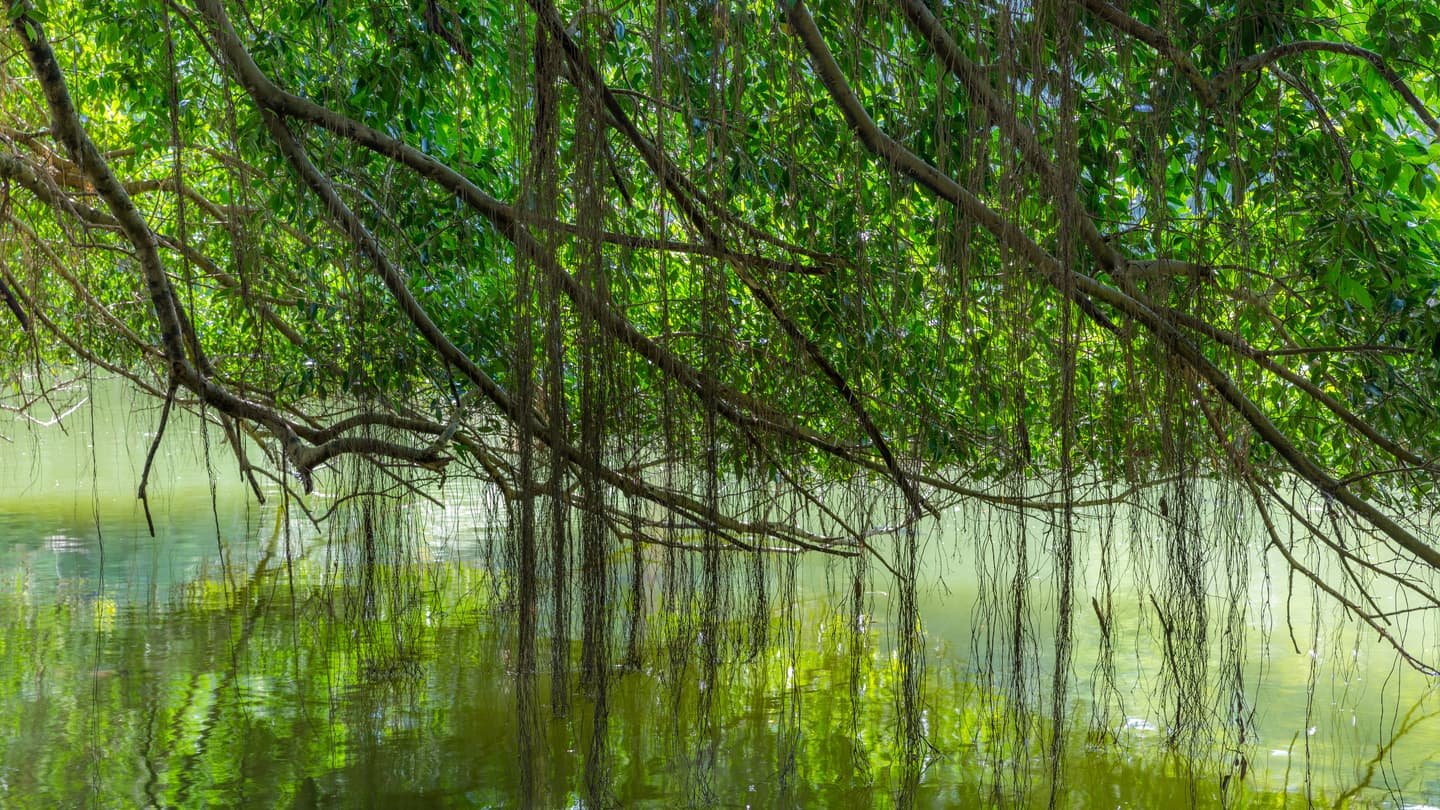
A Ficus kurzii over the water in the Singapore Botanic Gardens. Cropped and resized from a photograph by Basile Morin, CC BY-SA 4.0; this version is shared under the same licence.
The TreeTop Walk and the rainforest in the middle of the island
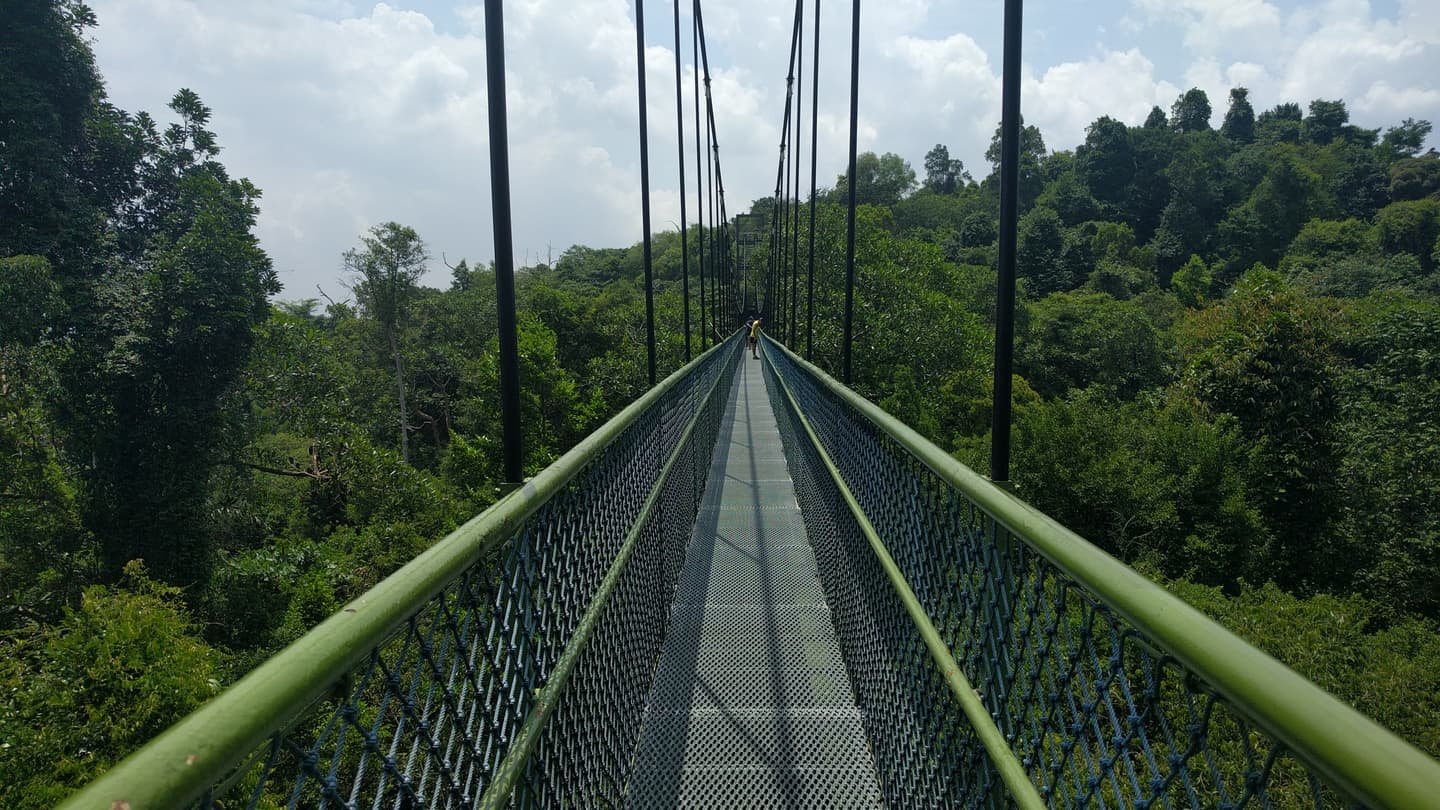
The real rainforest is closer than most people think. The TreeTop Walk in the Central Catchment Nature Reserve is a 250-metre freestanding suspension bridge between the reserve's two highest points, reached on forest trails from MacRitchie Reservoir or Windsor Nature Park. It is closed on Mondays except public holidays, and the walk in and out takes the better part of a morning, so start early and carry water.
Gardens by the Bay gets the photographs, but the green that Singaporeans actually use is the network of park connectors, reservoirs and nature parks between the housing estates. Almost none of it is ticketed and very little of it is on a tourist map. Heat is the only real constraint, and the answer is always the same: go in the first two hours of daylight.
The TreeTop Walk over the Central Catchment forest. Resized from a photograph by Drew Tarvin, CC BY 2.0.
Sentosa, beaches and a day for the children
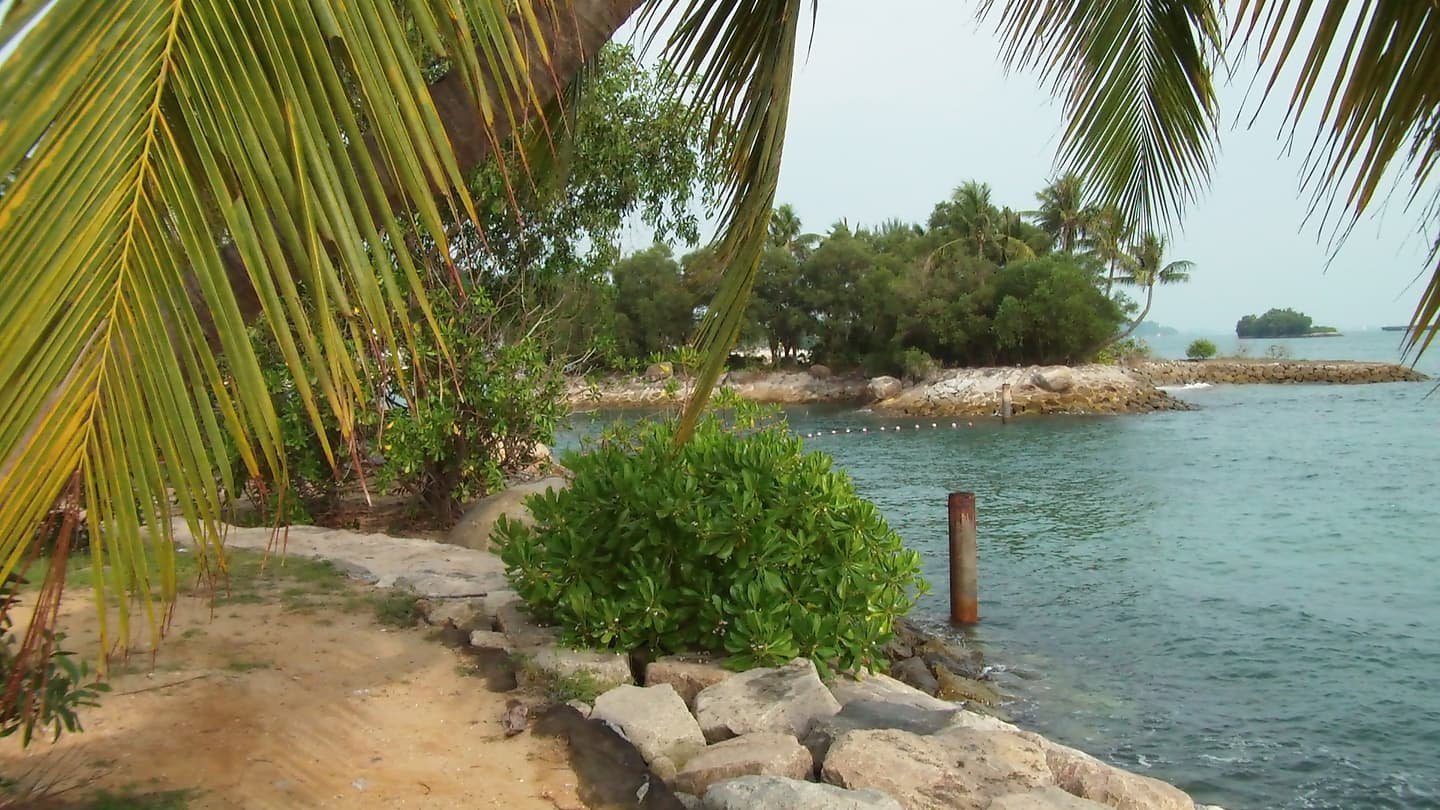
Sentosa is the resort island off the south coast, reached by monorail, cable car or a short walk along the Sentosa Boardwalk, and it is the one place on this list built around children. Universal Studios Singapore added Minion Land in February 2025, the Oceanarium sits beside it, and Siloso, Palawan and Tanjong beaches line the shore for the hours in between.
The newest reason to walk rather than ride is Sentosa Sensoryscape, a 30,000-square-metre landscaped link that carries you about 350 metres from Resorts World Sentosa down to the beaches through six themed zones, among them the Scented Sphere, Symphony Streams and the Glow Garden. It is at its best after dark, when the lighting comes up and the heat goes down.
A Sentosa day works best with a plan for the queues and a rule about the sun: the theme park in the morning, beach or pool from mid-afternoon, and back to the city for dinner. If the children are old enough to want something scarier, the season's after-dark events are listed further down.
The shoreline at Siloso Beach on Sentosa. Resized from a photograph by Fry72 (Karel Frydrýšek), CC BY-SA 4.0; this version is shared under the same licence.
Local favourites that rarely make the lists
Ask Singaporeans for non-touristy recommendations — as a fourth-time visitor did on r/askSingapore this month, drawing nearly sixty replies — and the answers point away from the bay. Tiong Bahru for its pre-war flats, bakeries and market. Joo Chiat and Katong for Peranakan shophouses and laksa. A heartland town such as Toa Payoh or Ang Mo Kio, where the hawker centre, the wet market and the void deck are the attraction. A new effort to turn heartland towns into destinations of their own, starting with Yishun, has been a lively topic on r/singapore.
Further out, the Kranji countryside in the north-west is farmland and goat dairies, with farm tours run by the Kranji Countryside Association for visitors who want to see it up close. And the weekend market circuit is a pastime of its own: the Shanghai-born Common Rare market made its overseas debut at Suntec City this month, and round-ups like that one are how many residents plan a Saturday.
None of these needs a ticket, and most need a guide less than they need a reason to go. They are also exactly the kind of day that is hard to assemble from a list, because the best of it is a stall, a lane or a kopitiam that changes from week to week.
What is on in Singapore, September to November 2026
The rest of September is short and busy. The Mid-Autumn Festival lanterns at Gardens by the Bay are up until 27 September, Celestial Nights runs at the Science Centre Singapore from 19 to 27 September, and the Nordic Film Festival is at Filmhouse until 26 September — all listed by Tempo. For the Science Centre, the evening programme is the version to aim for.
October belongs to the Singapore Grand Prix, 9 to 11 October, the city's first Sprint weekend — our race-week post covers where to stay and how to move once Marina Bay closes to cars. On Sentosa, Universal Studios Singapore's fourteenth Halloween Horror Nights and the Oceanarium's after-dark programme, Into the Glowcean, both run until 1 November.
November is quieter and wetter, and that is its appeal: shorter queues, easier hotel rates than race week, and heavy afternoon showers that pass as quickly as they arrive. Our guide to the best time to visit sets out what each month is really like, and the Meteorological Service Singapore publishes the forecast worth checking the night before.
Practical tips before you go
Pace the days around the heat: outdoor sights in the first hours of the morning or after five, and museums, glasshouses and lunch in between. Carry water, wear shoes you can walk in all day, and expect an afternoon downpour on many days from October — it is the reason every covered walkway in the city exists.
Getting around is easy. A contactless bank card taps straight onto any MRT gate or bus reader through SimplyGo, with no pass to buy, and the fare comes off the card afterwards. Taxis and ride-hailing fill the gaps late at night and on luggage days. Our guide to getting around Singapore covers the network, and our arrival guide covers the first hour at Changi.
Carry some cash in small notes for hawker stalls and older coffee shops, dress modestly for temples and mosques, and book the handful of things that sell out — the popular restaurants, the Grand Prix, a Friday table for chilli crab — before you land rather than on the day.
Questions visitors ask before a first trip
How many days do I need in Singapore? Four or five, if you can. Two days covers the bay, one hawker centre and one neighbourhood at a run; four lets you add Mandai or Sentosa, the Botanic Gardens at opening and an afternoon with nothing planned, which is usually the one people remember.
Is Gardens by the Bay free? The outdoor gardens, the Supertree Grove and the nightly Garden Rhapsody show are free; the Flower Dome, the Cloud Forest and the Supertree Observatory are ticketed. And the best free things to do in Singapore? The Botanic Gardens, the Marina Bay promenade, the heritage quarters on foot, the TreeTop Walk and the light shows.
Do I need a guide? Not to see the landmarks — the city is safe, signposted in English and easy to navigate. A guide earns the fee on the food, the neighbourhoods and the context, and our comparison of private and group tours is honest about when you do not need one at all.
Planning it with someone who lives here
Everything above is written down because it stays true for a season. What does not stay true is the part that decides whether a day works: which queue is short at this hour, which stall is closed this week, what the rain at four o'clock means for the plan. That is what a local guide carries and a list cannot.
Elite Experiences Pte Ltd holds Travel Agent Licence No. TA04089, and every guide on our roster is individually STB-licensed. We plan whole trips here as well as single days — the hotel, the transfers, a car and driver, the reservations and the itinerary — with private guiding at the centre of it. Our published tour packages are days of this shape with the prices stated, and our private tours are drawn around your dates and pace. Tell us what you want to see through the enquiry form, and we will come back to you in writing.
17. TikTok, the Common Rare market at Suntec City — its overseas debut. 18. Kranji Countryside Association — the farms and farm tours of the north-west. Community posts are paraphrased rather than quoted at length. Photographs are from Wikimedia Commons and credited under each image with its licence. Every link on this page was checked on 23 September 2026.
Shall we turn this list into your own days in Singapore?
Send us your dates and your party size. You get a written reply within 24 hours, in your language: an outline of the days and what shapes the cost. No obligation.